Wounds and skin infections in cattle — how to protect your animals all year round
A graze from a cubicle partition, a cut from fence wire, sutures after a caesarean or a small wound from a horsefly bite – in every cattle herd, minor skin injuries happen every day. On their own they are rarely serious. The trouble starts when the wound stays open in cowshed conditions: in the bedding, dust and manure, within reach of flies. Then even a small cut can turn into a festering infection that needs antibiotics and shows in the herd’s results.
Where do wounds and abrasions in cattle come from?
Most skin damage comes from the farm’s daily routine rather than from accidents. The most common sources are:
- Mechanical injuries. Cuts and scratches from wire, nails, protruding parts of gates and damaged fences, as well as injuries during driving, loading and transport, and from jostling within the group.
- Abrasions from cowshed equipment. The skin rubs against cubicle partitions, feed barriers, rails and drinkers, and against hard, rough floors. These abrasions appear most often on the hocks and carpal joints (the “knees”), the neck and the nape – wherever the animal presses against the equipment every day.
- Insect and animal bites. From spring to autumn, blood-sucking insects – flies, horseflies, biting midges and mosquitoes – pierce cattle skin. The animals rub and scratch the itchy spots against the equipment, so small wounds easily grow larger. Bites from other animals happen too.
- Post-surgical wounds. Castration, caesarean sections and hoof procedures leave wounds and sutures that spend the following days healing in the cowshed, not in a sterile surgery.
- Erosions and chafing. Prolonged moisture, wet bedding and contact with manure weaken the epidermis. Softened skin cracks and gets damaged more easily.
Why is an unprotected wound in the cowshed dangerous?
In a livestock building a wound is in constant contact with sources of infection, so even minor skin damage quickly becomes infected with bacteria.
- Bedding and manure. The animal lies down on the injured spot, and soiled bedding and manure keep carrying bacteria into the wound. Wounds on the legs and the lower body are the most exposed.
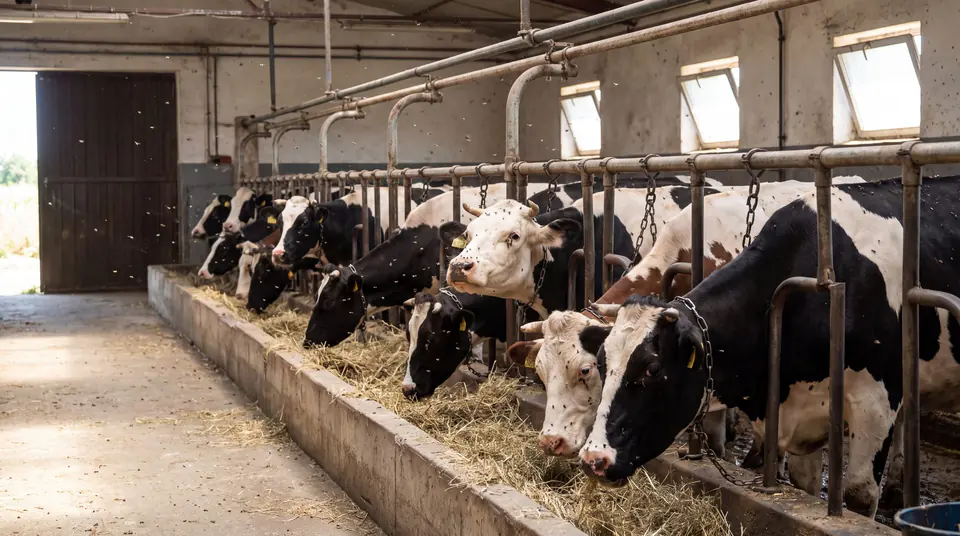
- Flies. Flies carry bacteria, including Salmonella and E. coli, as well as viruses and fungi. They land on manure and then on open wounds. They also irritate the animal, which rubs and scratches the damaged spot.
- Dust. Dust from feed, hay and bedding keeps settling on the exposed wound. In a livestock building you cannot keep the animal in clean surroundings, as you would after a procedure in a surgery.
- No dressing. A bandage on a cow’s flank, neck or hock is practically impossible to keep clean and in place. That is why most wounds in the cowshed heal without a dressing – in other words, without any protection.
The consequences are predictable: festering, delayed healing, costly antibiotic treatment and production losses. The longer a wound stays open and dirty, the greater the risk that a minor care issue turns into treatment by a vet.
How to protect a superficial wound properly
You can protect superficial wounds, abrasions and post-surgical sutures yourself if you act quickly and in the right order:
- Assess the wound. Deep or heavily bleeding wounds, wounds near the joints or eyes, and damage to mucous membranes need a vet’s assessment. Protect post-surgical sutures as advised by the vet who carried out the procedure.
- Clean the wound. Remove bedding, soil and dried dirt from the wound and the area around it, for example by rinsing it with clean water. If the hair around the wound is matted, clip it so you can see the edges of the injury.
- Dry the skin. Protective sprays go on clean, dry skin, so dry the area around the wound with a disposable towel before applying.
- Protect the wound. An exposed wound needs a barrier that shuts out bacteria from bedding, dust and insects – and that stays on the skin without a bandage.
- Watch the healing. Check the wound every day. Swelling, redness, pus, a bad smell or a fever mean infection – call the vet.
Removing the cause matters just as much. A protruding part of a partition, gate or fence will keep injuring animals until you fix it, and dry, regularly changed bedding reduces both erosions and infections.
DIPTRON ARGECURE: a spray that protects the wound and supports healing
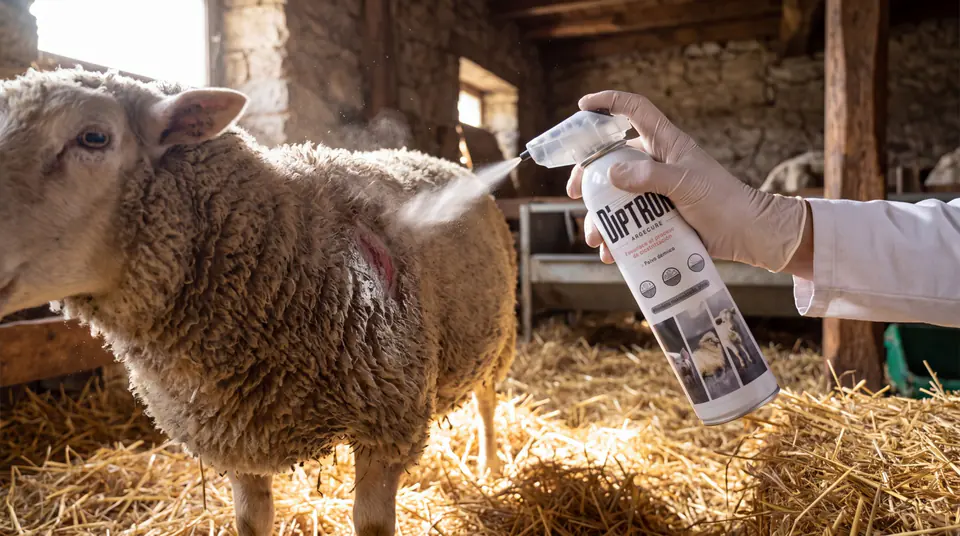
DIPTRON ARGECURE from Quimunsa is a topical aerosol preparation. It is designed to protect superficial wounds, surgical sutures, abrasions and skin erosions in farm animals and pets. It forms a protective barrier against microorganisms on the wound and at the same time supports tissue regeneration – with no need for bandaging.
It contains a high concentration of active ingredients with a triple action: antibacterial, antimicrobial and anti-inflammatory.
- Micronised aluminium. Forms a thin, breathable protective layer on the wound with an astringent effect. It reduces bleeding, seals the wound surface and acts as a physical barrier against microorganisms. It gives the product its characteristic silver colour.
- Silver. Silver ions disrupt the metabolism of bacterial cells and act on a broad spectrum of bacteria, including antibiotic-resistant strains. They reduce the need for systemic antibiotics.
- Rosehip oil (Rosa mosqueta). Rich in unsaturated fatty acids and vitamins A, C and E. It speeds up regeneration of the epidermis, moisturises the skin and reduces the risk of scarring.
- Gotu kola (Centella asiatica). Stimulates fibroblasts to produce collagen, so the wound closes faster. It has anti-inflammatory and antibacterial action.
- Glycerine. Moisturises and softens the wound edges, keeping the moisture level right for healing.
When to use
The manufacturer recommends DIPTRON ARGECURE for superficial wounds and mechanical abrasions, surgical sutures (after castration, caesarean sections and hoof procedures), skin erosions and chafing, bite wounds, and skin inflammation that needs protection and regeneration. In sheep and goats, also for skin damage after shearing.
Directions for use
- Shake the can well before use and between applications.
- Spray directly onto clean, dry skin from about 20 cm. The spray works in any position (360°), so you can apply it to a spot or a larger area, at any angle.
- Leave it to dry and do not remove it. It dries quickly, which reduces the risk of the wound getting contaminated.
- Reapply when the protective layer wears off, or as advised by your vet.
The product is ready to use and suitable for frequent application. Do not use it on mucous membranes or on deep wounds without a specialist’s assessment first. Pack: 250 ml aerosol. Store at 5–25°C in a dry, ventilated place, away from heat and sources of ignition.
 In the catalogueDIPTRON ARGECURE – wound-healing support spray for animals
Protecting the skin all year round
The risk of injury and infection changes with the seasons, so it pays to plan protection ahead:
- Spring and summer. Grazing, pasture fences and peak insect activity, which in Poland runs from April–May to October–November. Flies and horseflies irritate the animals and land on every open wound, so protecting wounds goes well with reducing fly numbers in the buildings and with repellents applied to the animals, such as DIPTRON® CulixCare.
- Autumn and winter. Cattle spend more time indoors, in the cubicles and at the feed passage. Abrasions from equipment become more common, and damp, soiled bedding encourages erosions and infections. It is a good time to check cubicle partitions, rails and floors.
- All year round. Castrations, caesarean sections and hoof procedures happen regardless of the season, and each one leaves a wound that heals in the cowshed. A wound-protection spray is worth keeping on the farm at all times.
The key rules
The best results come from combining three things: removing the causes of injury, keeping the bedding clean and dry, and quickly protecting every superficial wound. You will find the DIPTRON ARGECURE technical data sheet (TDS) and the enquiry form on the product page in our catalogue, under Animal care.