Darkling beetles in the poultry house — a hidden threat that costs poultry farmers thousands
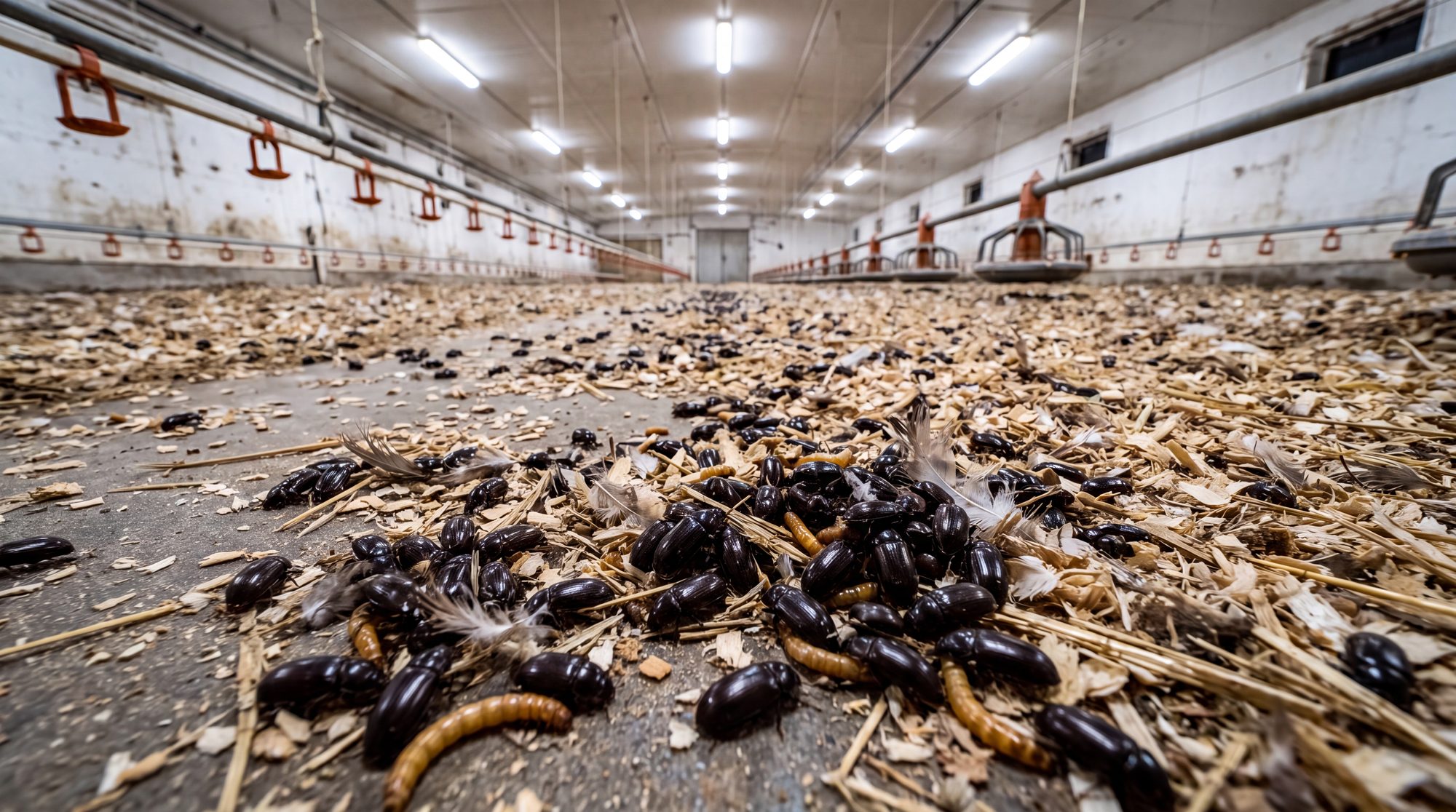
The darkling beetle, or lesser mealworm (Alphitobius diaperinus), is a small beetle just 5.5–6.7 mm long whose presence on poultry farms is widely underestimated. Its dark brown or black oval body with a characteristic sheen easily goes unnoticed in the litter. Yet this inconspicuous pest can quickly turn a well-run poultry house into a source of serious health and financial losses.
Why is the darkling beetle so dangerous?
The darkling beetle is omnivorous and prefers mouldy, musty or decomposing matter. It gathers in large numbers around feeders and drinkers, feeding on spilled feed in the litter. But the problem goes far beyond the feed it eats.
- Vectors of serious diseases. Darkling beetles carry and harbour the pathogens of many poultry diseases. They transmit Salmonella spp. and Escherichia coli bacteria, the viruses that cause Marek’s disease, Newcastle disease and avian leukosis, and intestinal parasites – tapeworms and coccidia. Infected insects can remain a source of pathogens for a long time, which is particularly dangerous in intensive units with high stocking densities.
- Damage to buildings. When food runs short, larvae and adult beetles start to migrate and damage the structure of the poultry house – wooden beams, polystyrene insulation and damaged plaster. Studies show they can reduce the thermal insulation of poultry buildings by as much as 30%, which means higher heating costs in winter.
- Lower production results. Poultry eat darkling beetle larvae, which upsets the birds’ digestion and can lead to constipation. The presence of thousands of insects also keeps the flock under constant stress, which means poorer weight gain and higher mortality.
- A risk to people. The quinones darkling beetles release in self-defence can cause allergic reactions in farm workers – skin irritation and respiratory problems.
Conditions that favour infestation
Poultry farms give the darkling beetle conditions close to those of the tropics it comes from – constantly high temperatures and access to food. The key factors that help it multiply are litter moisture above 20–30%, inadequate ventilation and a build-up of organic matter. Above 25°C the insect’s life cycle speeds up considerably, and the population can reach millions per square metre of litter.
An effective solution: BLATICIDA EC
For the professional control of darkling beetles in poultry houses there is BLATICIDA EC – a concentrated, broad-spectrum insecticide made by the Spanish company Quimunsa.
Active substance and formulation. The product contains 15% cypermethrin and 15% piperonyl butoxide (PBO). It is an emulsifiable concentrate (EC) – a microemulsion formulation with a strong immediate and flushing-out action. Initial insect mortality after contact with the product is close to 100%, which ensures a fast knock-down effect.
How to use it. Blaticida® Concentrado EC can be applied in three ways:
- Spraying: 6.5 ml of product per 1 litre of water for an area of 20 m². For larger areas: 32.5 ml in 5 litres of water for 100 m².
- Cold fogging: 6 ml of product per 1 litre of water for 1,000 m³.
- Thermal fogging: 7 ml of product in 60 ml of oil for 1,000 m³.
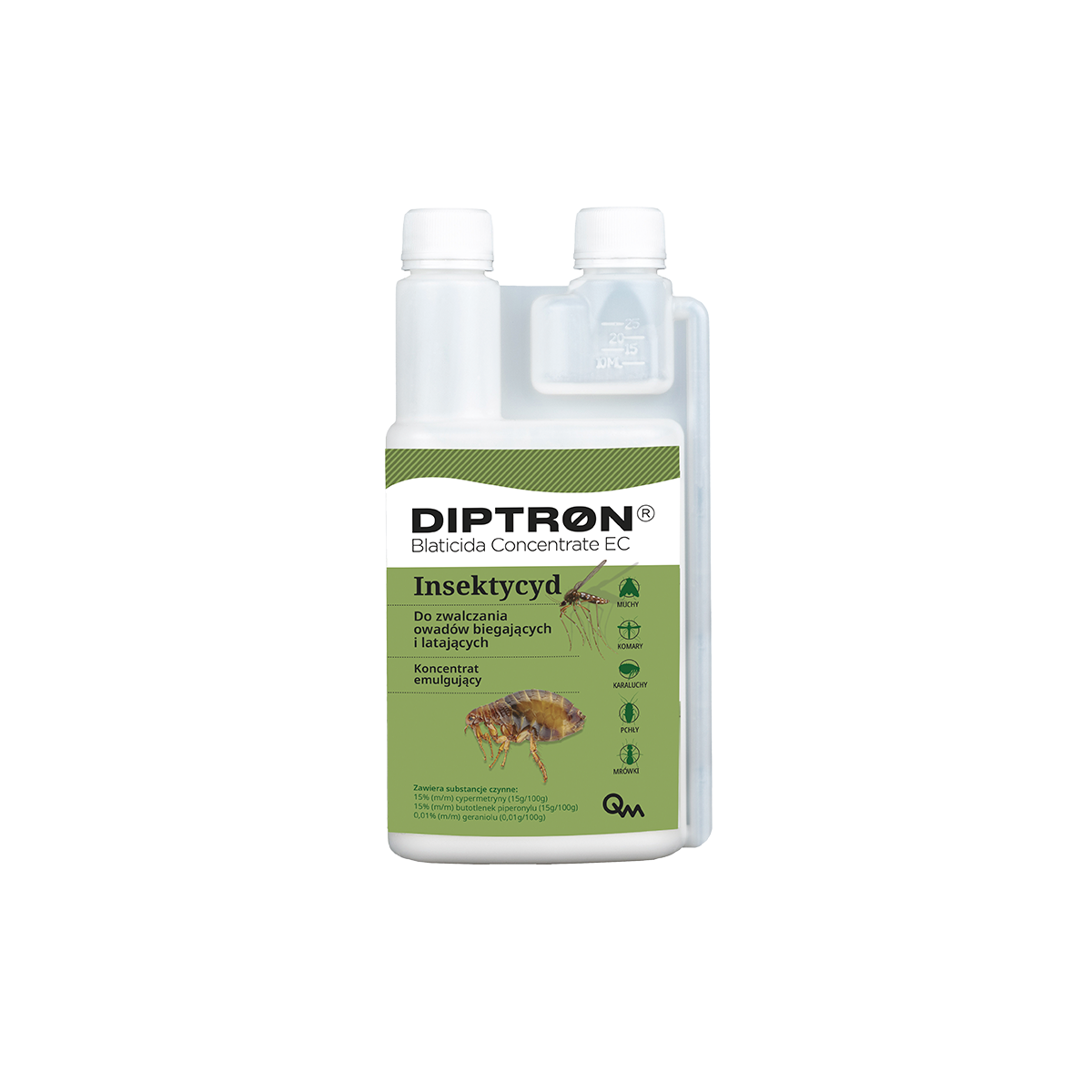 In the catalogueBLATICIDA EC – insecticide for flying and crawling insects
The re-entry period is 3 hours, so birds can return to the house soon after treatment. Packs: 250 ml bottle (cat. no. 5001289: 10 × 250 ml) and 1 l bottle (cat. no. 5001290: 6 × 1 l). For professional use. Gloves, safety glasses and a mask are required during application.
An alternative without insecticides: DIPTRON BIOPOLYMER
Farmers looking for a solution without insecticides can turn to DIPTRON BIOPOLYMER – a polymer that eliminates insects by physical action alone. The active substance is polyalkylene oxide modified heptamethyltrisiloxane. The product forms a three-dimensional molecular structure that immediately surrounds and immobilises the insect, killing it by suffocation.
DIPTRON BIOPOLYMER contains no insecticides, leaves no stains and is odourless. It is used as a concentrate diluted in water, at 1.5% for poultry red mite control (80–100 ml of spray liquid per m² or 20 ml per bird). It comes in 1 l bottles (case: 6 × 1 l) and is intended for general use, with no withdrawal period.
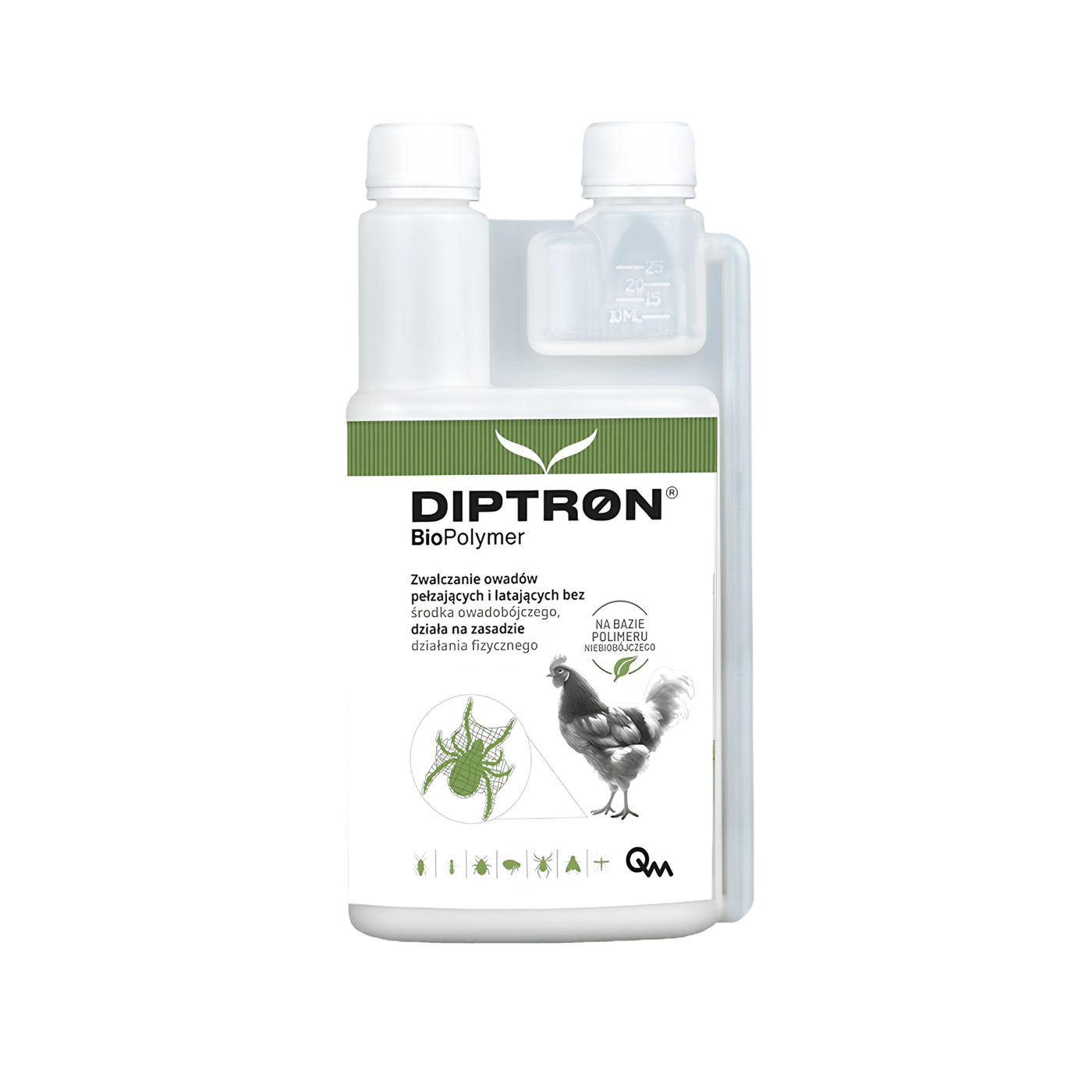 In the catalogueDIPTRON BIOPOLYMER – insect control formulation without insecticides
Practical tips
The most effective strategy against darkling beetles combines chemical treatment with preventive measures: regular litter changes, proper ventilation and lower humidity in poultry houses. The insecticide treatment is best carried out during the clean-out between flocks, before the new flock is placed.